

Podlaha v pronájmu: jak vybrat odolnou a snadno vyměnitelnou podlahu
 úno, 24 2026
When you’re renting out an apartment, your floor isn’t just a surface-it’s the first thing tenants notice, the most walked-on part of the home, and often the first thing that shows wear. Choosing the right flooring for rental units isn’t about making it look fancy. It’s about making it last, stay clean, and be easy to replace when the tenant leaves. In the Czech rental market, one material has quietly become the standard: vinyl.
Proč nejsou klasické podlahy dobré pro pronájem?
Many landlords still think hardwood or ceramic tile is the best choice. But in practice, they’re often the worst.
Hardwood floors look nice, sure. But in a rental, tenants bring in dirt, boots, pets, and kids. Hardwood scratches easily. Even small dents from furniture legs or dropped objects can’t be fixed without sanding and refinishing-something you can’t do between tenants. And if moisture gets in from a leaky sink or a flooded bathroom? That’s rot. That’s replacement. That’s lost rent.
Ceramic tile? It’s tough, but it’s cold. In winter, tenants complain. In summer, it’s slippery. And if a tile cracks? You need to remove the whole section, dig out the adhesive, and lay new tile. It takes days. Tenants move out. You lose income.
Linoleum? It fades. It cracks at the seams. It doesn’t handle heavy foot traffic well. Bamboo? It absorbs moisture. Cork? It dents under furniture. Soft PVC rolls? They leave permanent marks from boots. All of these are common in older rentals-and all are reasons tenants leave faster and landlords spend more.
Vinyl: proč je to nejlepší řešení pro pronájem?
Vinyl flooring, especially modern floating vinyl with click-lock systems, solves nearly every problem landlords face.
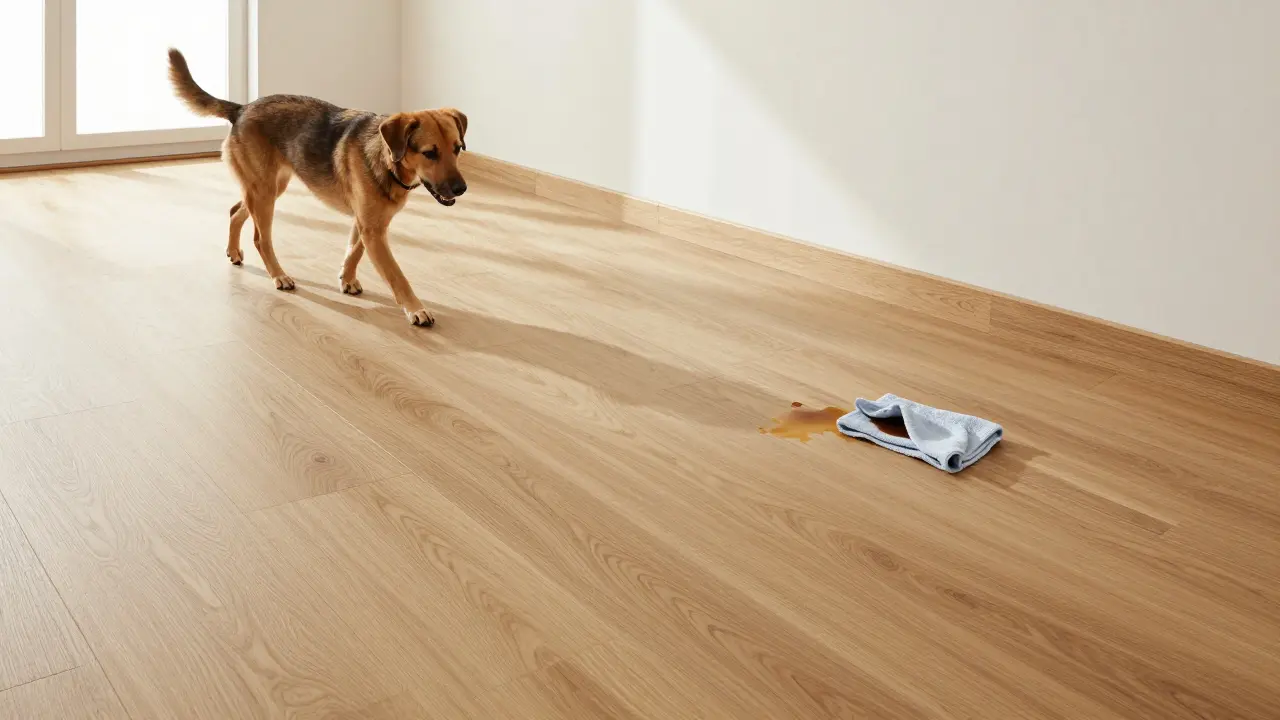
First, it’s incredibly durable. It resists scratches from pet claws, scuffs from shoes, and dents from furniture. It doesn’t crack under heavy loads. It doesn’t swell if water spills. It handles spills from coffee, pet accidents, or leaking washing machines without a single problem.
Second, it’s easy to clean. A damp mop, a quick vacuum, or even just a broom is enough. No special cleaners. No waxing. No polishing. Tenants can clean it themselves. You don’t need to hire a professional after every move-out.
Third, it’s fast to install. Floating vinyl planks click together like puzzle pieces. You don’t need to remove the old floor-just lay it over linoleum, tile, or even plywood if it’s flat and stable. No glue. No nails. No waiting for adhesive to dry. A whole apartment can be done in one day.
And here’s the game-changer: you can take it with you.
If a tenant leaves and you want to reuse the flooring in another rental unit, you can carefully pop the planks up, store them, and reinstall them elsewhere. No waste. No new purchase. Just clean, dry, and re-lay. This isn’t possible with tile, hardwood, or glued-down vinyl.
Co vybrat: 4-5 mm plátky s klikovým systémem
Not all vinyl is the same. For rentals, stick to these specs:
- Thickness: 4-5 mm. Thinner than 4 mm? It’s too flexible and will dent. Thicker than 5 mm? Unnecessary-and harder to fit under doors.
- Wear layer: Minimum 0.3 mm. This is the clear protective top layer. The thicker it is, the longer it lasts.
- Click-lock system: Must be floating. No glue. No nails. This is non-negotiable.
- Design: Go for realistic wood looks. Oak, walnut, ash-these sell faster. Concrete or stone patterns work too, but wood is still the top choice for Czech renters.
Brands like Quick-Step a popular floating vinyl brand with high wear resistance and water-tight click joints, Gerflor a French manufacturer known for durable, commercial-grade vinyl used in rental markets across Europe, or Parador a Czech-made vinyl option with excellent price-to-performance ratio and local availability are commonly used in rental properties. They all offer 10-20 year warranties for commercial use.
Instalace: jak to udělat správně
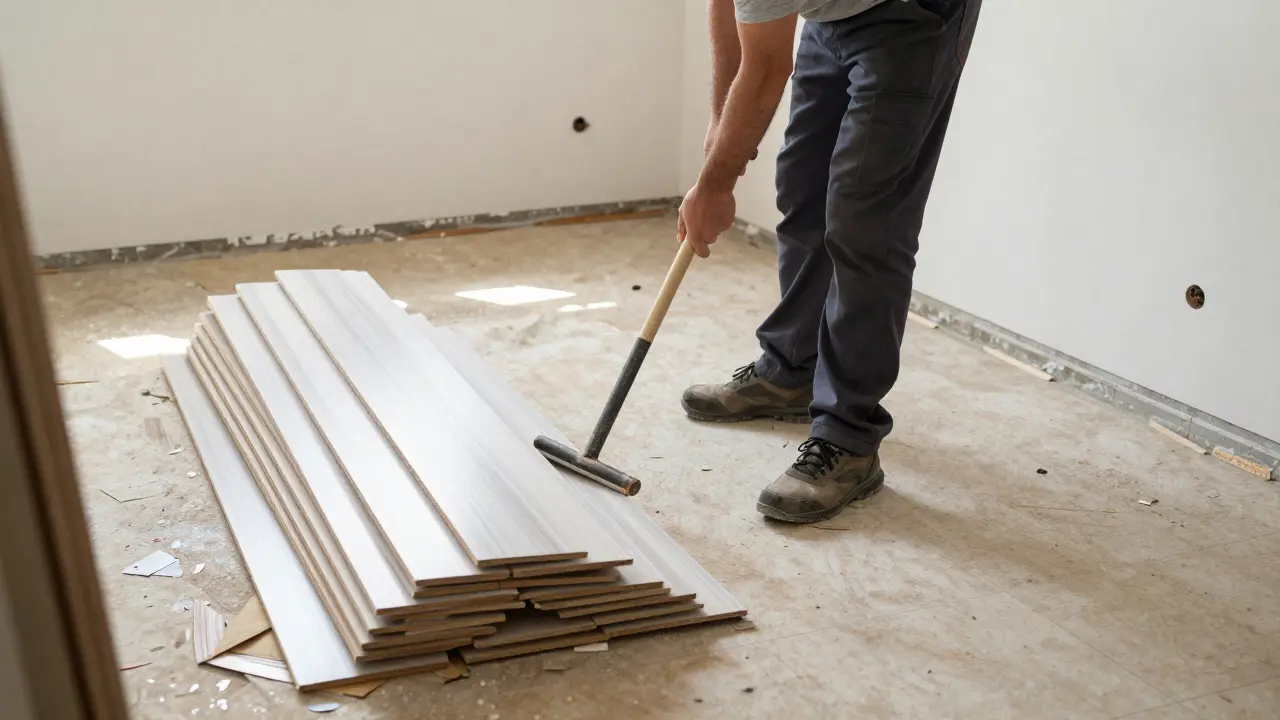
Installation is simple, but skipping steps leads to problems.
- Check the subfloor. It must be dry, flat, and clean. No loose tiles or cracked linoleum. If it’s uneven, use self-leveling compound.
- Leave a 10 mm expansion gap around walls. Use spacers while installing.
- Start in the corner. Lay the first row parallel to the longest wall.
- Click the planks together. Don’t force them. A rubber mallet helps.
- Use a saw to cut the last row to fit. Always measure twice.
- Install baseboards or quarter-round trim to cover the gap.
You don’t need to remove old linoleum. You don’t need to prime the concrete. You don’t need to wait 24 hours. This is why vinyl is perfect for short-term renovations between tenants.
Cena a návratnost: proč se to vyplatí
Vinyl costs more upfront than basic linoleum-maybe 300-600 Kč per square meter. But here’s the math:
- Linoleum: lasts 5-7 years in rentals. Replaced every 2-3 years. Cost: 150 Kč/m² + labor.
- Ceramic tile: lasts 15+ years, but replacement cost: 1,200 Kč/m² + 3 days of lost rent.
- Vinyl: lasts 10-15 years. Replacement cost: 500 Kč/m² + 1 day of work.
And because you can reuse the vinyl, you’re not just saving money-you’re saving time. A landlord in Brno replaced vinyl in three apartments over two years. Each time, he moved the planks to the next unit. Total cost: 12,000 Kč. If he’d used tile each time? Over 100,000 Kč.
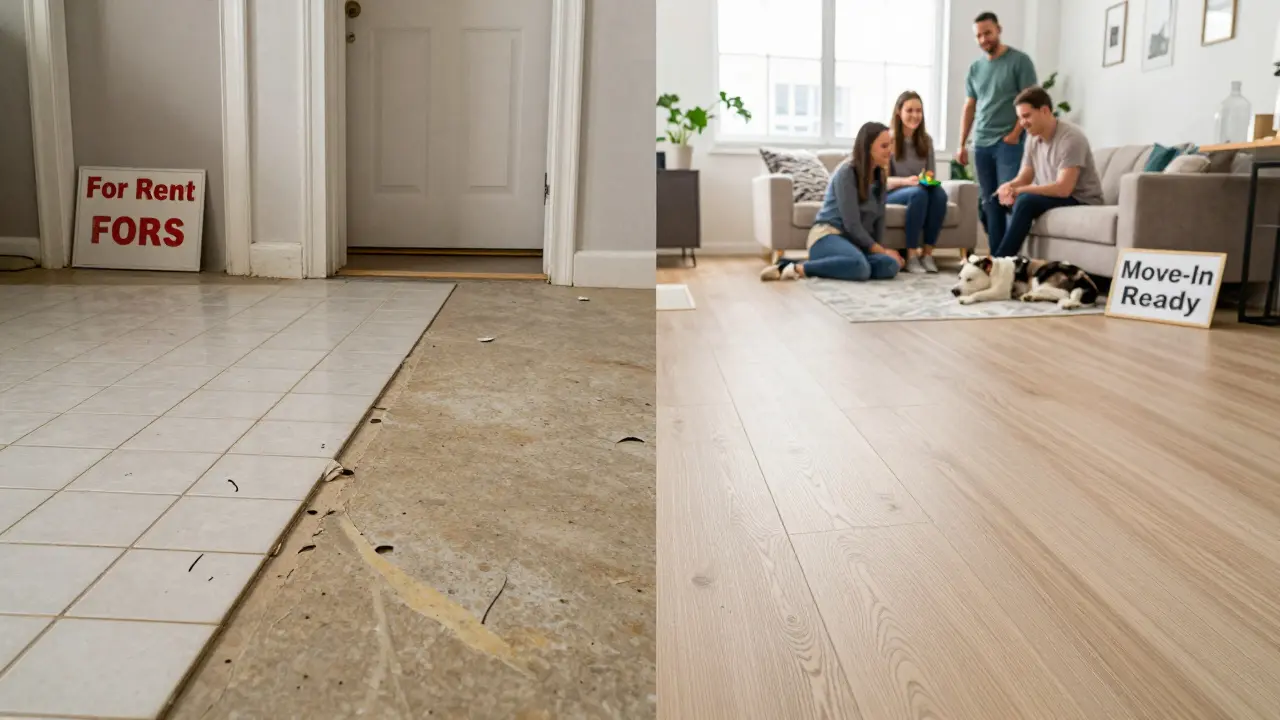
Plus, tenants notice. A clean, modern floor makes the apartment feel newer. Rent gets paid on time. Vacancy drops. You get better reviews. It’s not just flooring-it’s a marketing tool.
Co neudělat
Don’t install:
- Soft PVC rolls-they dent under boots
- Glued-down vinyl-it’s hard to remove and traps moisture
- Bamboo or cork-they absorb water and warp
- Thin laminate (under 8 mm)-it’s not made for high traffic
- Carpet-it holds allergens, smells, and stains
And never skip the expansion gap. Vinyl expands and contracts with temperature. No gap? It buckles. Then you have a bigger problem.
Když přijde čas na výměnu
When a tenant leaves, you don’t need to call a contractor. Just:
- Remove baseboards.
- Start at one corner. Lift the first plank gently.
- Unsnap the planks row by row.
- Stack them flat, dry, and clean.
- Wipe the subfloor. Check for damage.
- Reinstall in the next unit-or store for future use.
It takes two hours. No dust. No noise. No mess. You’re ready for the next tenant by evening.
Je vinyl podlaha skutečně odolná proti škrábancům od psů?
Ano, moderní vinyl s vrstvou opotřebení 0,3 mm a vyšší je odolný proti škrábancům i od velkých psů. Neznamená to, že nezůstanou žádné stopy, ale ty se nebudou prohlubovat a nebudou poškozovat podklad. Když se objeví hlubší škrábance, lze je často odstranit jemným polévacím prostředkem nebo obnovovací kremovou vrstvou. Většina kvalitních vinylových podlah má 10-20letou záruku na opotřebení, což znamená, že jsou navržené přesně pro vysokou náročnost, jako je pronájem.
Můžu vinyl položit přímo na starou dlažbu nebo linoleum?
Ano, to je jedna z hlavních výhod. Floating vinyl lze položit přímo na staré podlahy, pokud jsou rovinné, suché a pevné. Nejde o to, jestli je to keramika, linoleum nebo beton. Důležité je, aby nebyly hluboké trhliny, výběžky nebo volné dlaždice. Pokud je povrch neúplně rovný, použijte vyrovnávací složku. To vám ušetří týdny práce a tisíce korun na demolici.
Je vinyl vhodný pro koupelny a kuchyně?
Ano, ale pouze pokud je to plně vodotěsný vinyl s klikovým systémem a vodotěsnými švy. Mnoho vinylových podlah je označeno jako 100% vodotěsných. To znamená, že voda neproniká mezi prkénka ani pod ně. V koupelnách a kuchyních je to klíčové. Nezapomeňte ale na těsnění okrajů kolem vany nebo umyvadla-tam může voda vniknout z boku, i když podlaha sama je vodotěsná.
Je vinyl podlaha tepelně izolační?
Vinyl je mnohem teplejší než keramika nebo beton. Při teplotě podlahového vytápění se chová dobře, protože má nízkou tepelnou vodivost. Nezahřívá se tak rychle jako kámen, ale také neztrácí teplo tak rychle. V zimě je podlaha příjemnější na nohy než klasická dlažba. Pro větší tepelnou izolaci můžete pod vinyl položit tenký podklad (např. 2 mm pěnový), ale není to nutné.
Můžu vinyl přemísťovat mezi různými byty?
Ano, to je jedna z největších výhod. Když přijde čas na výměnu, pečlivě odstraňte plátky, očistěte je a uložte. Při instalaci v novém bytě je můžete znovu použít. Někteří vlastníci přemísťují vinyl mezi 3-5 byty během 5 let. To znamená, že za 5 let zaplatíte za podlahu jen jednou. To není možné s žádnou jinou podlahou.
Kam dál?
If you’re still using linoleum or tile in your rentals, you’re spending more than you need to. Vinyl isn’t just a trend-it’s the new standard for rental properties in the Czech Republic. It’s durable, affordable, easy to install, and easy to reuse. The math is clear: less downtime, lower costs, happier tenants.
Start with one apartment. Try a floating vinyl with a 0.3 mm wear layer. See how fast you can turn it over. Then do the next one. You’ll wonder why you didn’t switch sooner.